Showing posts with label official. Show all posts

Wednesday, August 27, 2014

Cold cash just keeps washing in from ALS challenge

In the couple of hours it took an official from the ALS Association to return a reporter's call for comment, the group's ubiquitous "ice bucket challenge" had brought in a few million more dollars.

In this photo taken on Tuesday, Aug. 26, 2014, Ten Pocket iNet corporation employees, from left,including Terri McMakin, Don Gibbard, weargin hard hat, and Jake Tegtmeier, right, take the ice bucket challenge at the Walla Walla Regional Airport in Walla Walla, Wash.to benefit ALS research. The water was poured from two lift trucks. Gibbard said he wore his hard hat to protect from the ice cubes and took the brunt of dousing because "I was pulled back!": In this photo taken on Tuesday, Aug. 26, 2014, Ten Pocket iNet corporation employees, from left,including Terri McMakin, Don Gibbard, weargin hard hat, and Jake Tegtmeier, right, take the ice bucket challenge at the Walla Walla Regional Airport in Walla Walla, Wash.to benefit ALS research. The water was poured from two lift trucks. Gibbard said he wore his hard hat to protect from the ice cubes and took the brunt of dousing because "I was pulled back!"

Approaching $100 million, the viral fundraising campaign for the ailment better known as Lou Gehrig's Disease has put the ALS group into the top ranks for medical charity donations. Since the end of July, the money has been sloshing in at a rate of about $9 million a week. Last year, from July 29 to Aug. 26, the group raised just $2.6 million.
It's caught everyone off-guard, none more so than the ALS Association folks. But they know this is likely a one-off phenomenon, and the group now faces the task of spending all that money wisely. Research, care and advocacy are the group's three main missions — but officials say they don't know yet exactly how they'll use the astonishing windfall.
"I think even if I or any PR person at either a non-profit or a for-profit company had all of the PR dollars in the world to invest, no one would have come up with this idea," says Carrie Munk, the association's spokeswoman. "We realize there are responsibilities that come with being good stewards of these dollars."
In this Friday, Aug. 22, 2014 file photo, people pour ice water over themselves during an "ice bucket challenge" fund raising event in Bangkok. About a thousand people turned out to raise money for the fight against ALS, or Lou Gehrig's Disease.
Part of what's surprising is that ALS — or amyotrophic lateral sclerosis — is one of those "orphan" diseases. It is a neurodegenerative disease that causes paralysis and death, and the association estimates that about 5,600 new cases are diagnosed in the U.S. each year.
This campaign hasn't exactly put the charity in the same neighborhood as giants like the American Cancer Society, the American Heart Association or Susan G. Komen for the Cure — which raised $889 million, $529 million and $310 million last year, respectively. But it's moving into the same ZIP code now.
"People who have been in this space for a long period of time feel like it's a dream come true," says Munk.
In case you've been under the proverbial rock, here are the basic rules: Someone issues a challenge — that you allow yourself to be doused with a bucket of ice and water, like winning coaches along the sidelines. Then, the challengee has 24 hours to make a $100 donation to the ALS Association or submit to the water torture.
In the last month, everyone from Microsoft co-founder Bill Gates to former President George W. Bush has been doused. The Internet and airwaves are awash in videos of people taking the challenge — even if they fully intend to write the check.
Jonah Berger, author of the book "Contagious: Why Things Catch On," says it's like a modern-day chain letter — except, in this case, everyone will know if you break the chain.
"It has a lot of the key ingredients that often make people want to share things," says Berger, a marketing professor at the University of Pennsylvania's Wharton School. "It gives people lots of social currency to be part of it. It makes you look good. It makes you look smart and in the know; you know what's going on. And it's always hard to back down from a challenge."
And now others are co-opting the bucket challenge for their own causes.
Actor Matt Damon, for instance, dumped toilet water over his head to call attention to his passion — safe drinking water. Actor Orlando Jones of the television series "Sleepy Hollow" showered himself with bullets in the wake of black teenager Michael Brown's shooting death by a white police officer in Ferguson, Missouri.
"I'm challenging myself to listen without prejudice, to love without limits and to reverse the hate," he said. "So that's my challenge — to me. And, hopefully, you'll accept this challenge, too."
But the success for ALS is the kind of thing you can't really replicate — even if you did it first.
In late June, about a month before the ice bucket challenge exploded, University of Arizona woman's basketball coach Niya Butts took the "cold water challenge." After being doused with a 10-gallon plastic cooler, Butts gave her Pac-12 coaching rivals 48 hours to do the same or donate $250 to the Kay Yow Cancer Fund — named for the North Carolina State University coach who succumbed to the disease in 2009. That challenge — #Chillin4Charity — has raised only about $75,000 so far.
"We didn't raise millions," Butts told The Associated Press on Wednesday. "But we raised awareness of millions."
The campaign has had more than 80,000 tweets, 100,000 retweets more than 215 million Twitter reaches, said Susan Donohoe, the Yow fund's executive director.
The Chronicle of Philanthropy says the ALS Association has, in this short period of time, raised more than many of the charities included on its Philanthropy 400 list.
"Right now, we're really focused on reaching out to and acknowledging and thanking the over 2 million donors that have come to the ALS Association," said Munk, the association spokeswoman. "And also working to put a process in place to make the best decisions to spend these dollars."
The American Institute of Philanthropy's CharityWatch gave the group a B+ rating for spending about 73 percent of their cash budget on programs. Analyst Stephanie Kalivas has no reason to believe that rating will need to be downgraded.
"We will definitely be keeping an eye out for them," she says. "Hopefully, they won't be wasteful with it."
Dr. Richard Bedlack, who runs the ALS clinic at the Duke Institute for Brain Sciences in Durham, North Carolina, knows how he would allocate the money. While the temptation might be to plow it all into the search for a cure, he says the biggest strides have been made in patient care and quality of life, and that would be his No. 1 priority.
"The chances of one of these research studies really finding meaningful disease-modifying therapy is very small," he says. "We're shooting in the dark. So, of course we've got to keep trying. But the bottom line is we've got to understand this disease better before we're going to be able to fix it in most people."

Tuesday, August 19, 2014

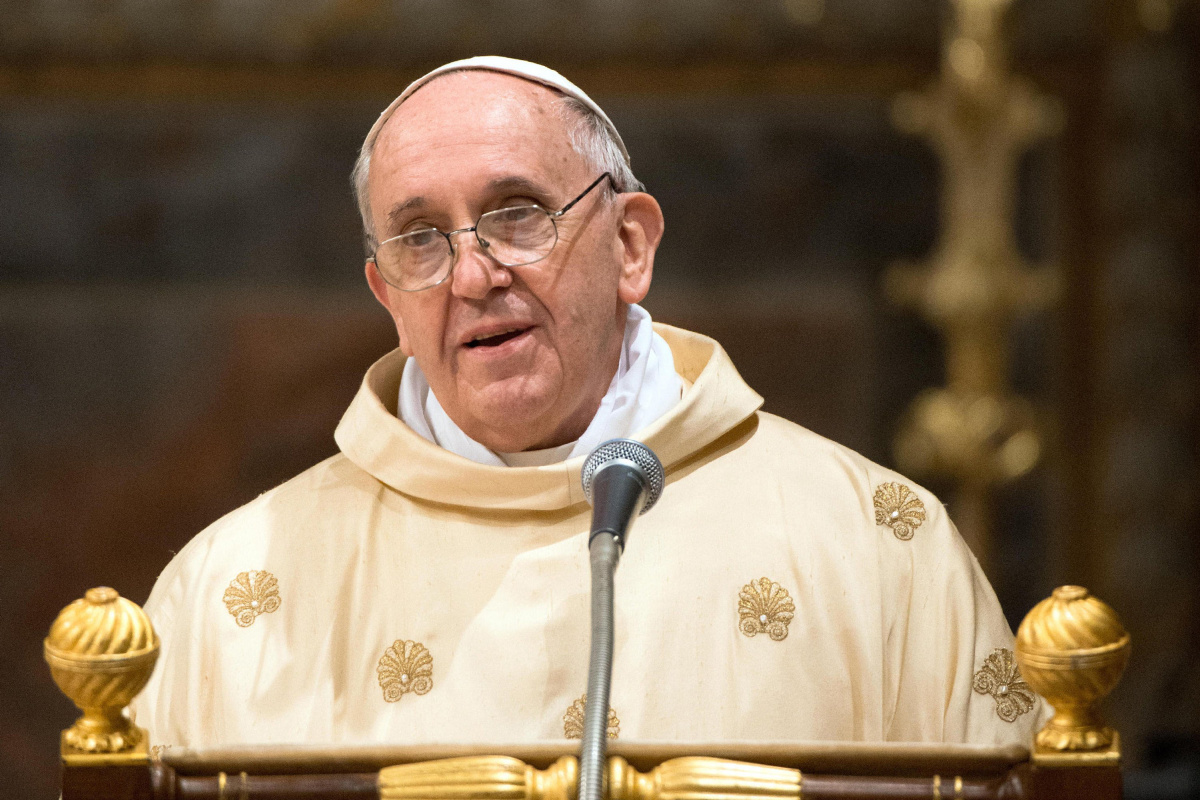
Pope Francis grieving for relatives killed in Argentina crash

Pope Francis was deeply grieved, the Vatican's official broadcasting service said on Tuesday, after the deaths of three relatives killed when their car slammed into the back of a truck on a highway in central Argentina.
A nephew of the pope, Emanuel Bergoglio, who was driving the car was in serious condition following the accident just after midnight on Monday. The nephew's wife, 35, and two children aged 2 years and 8 months died.
"The pope has been informed and is deeply grieved by the tragic news. He asks all those who share his pain to join with him in prayer," said a statement on the website of Radio Vaticana.
The driver of the grains truck, Raul Pombo, told local television stations he felt the impact and found Bergoglio's vehicle wedged under the rear of his vehicle.
"I began stopping passing cars to ask for their fire extinguishers because the car was on fire," Pombo said.
The region's highway patrol chief, Jorge Rainieri, called the impact "powerful" and television pictures showed the mangled wreckage of the compact car. The accident occurred in Argentina's central Cordoba province.

Saturday, August 9, 2014

NYPD Police-mayor tensions mount over chokehold death

William Bratton, Bill de Blasio, Al Sharpton: FILE- In this July 31, 2014 file photo provided by the New York City Mayoral Photography Office, New York Mayor Bill de Blasio, center, is seated between New York City Police Commissioner William Bratton, left, and the Rev. Al Sharpton, during a round table discussion convened to ease tensions over the July 17, police involved death of Eric Garner.Police have become increasingly at odds with Mayor Bill de Blasio over the appearance he is taking sides against them after the chokehold death of a black suspect last month — a conflict that has prompted the city's top law enforcement official to do damage control by calling the mayor "very pro-cop." 

What angered many was a recent forum in which the Rev. Al Sharpton, one of the biggest critics of the New York Police Department, was seated alongside the mayor, a liberal Democrat, and the police commissioner as he lambasted law enforcement and suggested the mayor's mixed-race son would be a "candidate for a chokehold" if he were an ordinary New Yorker. The image was seized on by critics of the administration and plastered on the cover of the New York Post with the headline "Who's the Boss!"

"It is outrageously insulting to all police officers to say that we go out on our streets to choke all people of color as Al Sharpton stated while seated at the table right next to our mayor at City Hall," said Patrick Lynch, head of the powerful Patrolmen's Benevolent Association. Another union official, Ed Mullins of the Sergeants Benevolent Association, hinted at a work slowdown at the nation's largest police department.

Former Mayor Rudolph Giuliani even weighed in, saying in a radio interview thatde Blasio made a "big mistake .... setting up a press conference like that and putting a police commissioner in that situation. That's extremely damaging to the police commissioner, to keep up the morale of the police."

In recent days, emails have circulated among police officers showing a mock identification card with a picture of Sharpton and the title "Police Commissioner." The activist has shot back by claiming he has the ear of federal officials who have the authority to bring civil rights charges in the death of Eric Garner.

"It is time to have a mature conversation about policing rather than immature name calling and childish attempts to scapegoat," Sharpton said in a statement.

Bratton responded to the uproar by giving a series of interviews Friday defending his department's record on race and de Blasio's attitude toward the department.

"We are not a racist organization," Bratton told The Associated Press. "And I will challenge anybody despite their perceptions of police on that issue. This is a department that goes where the problems are — whether it's crime or disorder."

De Blasio, he added, "is very pro-cop. ... This is not an anti-police mayor."

The rift stems from Eric Garner's arrest on suspicion of selling loose, untaxed cigarettes in Staten Island. Amateur video appears to show an officer putting the asthmatic, 350-pound father of six in a banned chokehold after he refused to be handcuffed. He yells, "I can't breathe!" as several officers take him down.

A city medical examiner found that the 43-year-old Garner was killed by neck compression from the chokehold along with "the compression of his chest and prone positioning during physical restraint by police." Asthma, heart disease and obesity were contributing factors.

The finding increased the likelihood that the case will be presented to a grand jury to determine whether any of the arresting officers will face criminal charges. It also has fueled the biggest crisis yet for de Blasio, who took office this year vowing to achieve two goals that, at times, can be contradictory: He said he would drive down crime and repair strained relations between police and the community.

"Every law enforcement official, every officer has to serve the people in this city," the mayor said. "The vast majority of people in the NYPD take that very, very seriously. If some individuals don't, that's a problem for us because we need people to go out there and do our jobs and do them well."

Some lawmakers and experts say the decades-old theory no longer applies to a city with far less crime, unnecessarily puts nonviolent people at risk and fuels tensions in the city's minority communities.

"Serious crime has decreased dramatically in New York City in the two decades that broken windows policing has been in force, yet the causal connection between that drop and huge numbers of arrests for minor transgressions is unproven to this day," Steve Zeidman, a law professor at City University of New York, wrote in a recent op-ed piece.

Bratton has insisted that the NYPD will stick with the tactic. He also has defended the powwow with Sharpton.

"Whether you like Al Sharpton or not, he clearly is a spokesperson, particularly for African-Americans, and that is reality," Bratton sai