Showing posts with label iraq. Show all posts

Friday, September 5, 2014

Iraq Isis Crisis: Al-Baghdadi's Top Aide 'Killed' in US Airstrike

Iraq ISIS

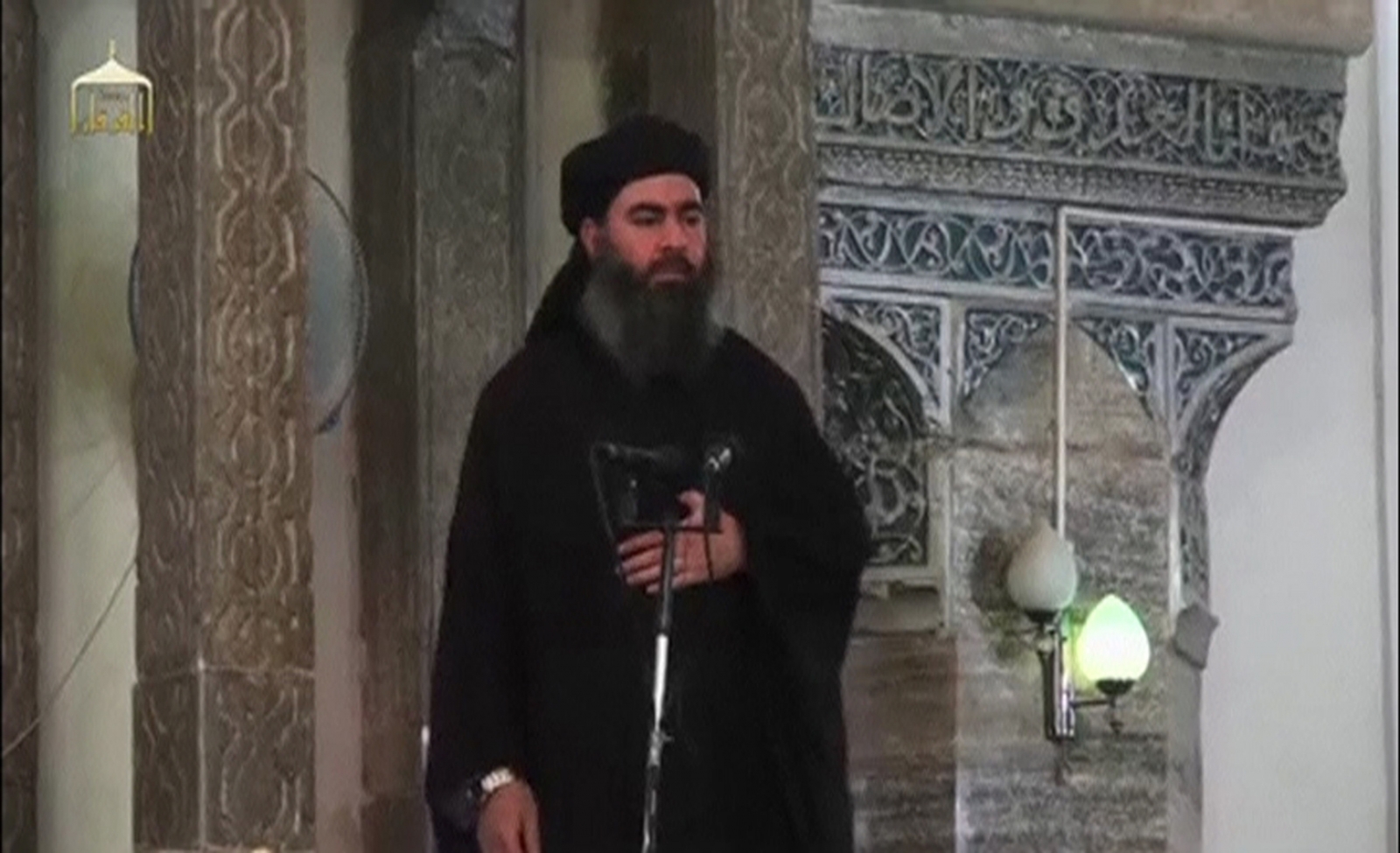
Abu Hajar al-Sufi, a top lieutenant of Isis leader Abu Bakr al-Baghdadi, has been killed in a US airstrike.

Iraq's defence ministry announced the killing of al-Sufi along with two other senior Sunni insurgents in the Isis-controlled northern Iraqi city of Mosul.

One of them was said to have been an explosives expert and the other a military strategist.

Pentagon spokesperson Colonel Steve Warren could not confirm the death of the Isis commander but told NBC News that the senior figures could have been killed if they had been "inside troop formations".

Speculation in the Iraqi social media suggested that al-Baghdadi himself may have been killed in the attack but the Iraqi defence ministry clarified that it was his suspected right-hand man who was killed.

The fallout of the death of al-Sufi, if confirmed, is still unclear as analysts are yet to get a clearpicture of the organisational structure of the Isis.

In another development, the Sunni insurgents are said to have abducted dozens of men in northern Iraq.

The abductions took place in Tal Ali village, about 240kms north of the capital Baghdad, reports quoting residents said.

At least 50 men were believed to have been rounded up before being loaded onto cars and trucks and taken to a secret location.

The abductions took place after the residents set Isis flags on fire as the militants were retreating in the face of the Iraqi offensive.

Wednesday, September 3, 2014

Pope to Iraqi Christians: You are church's heart

Pope Francis leads his Sunday Angelus prayer in Saint Peter''s square at the Vatican, September 1, 2013.: Pope Francis leads his Sunday Angelus prayer in Saint Peter''s square at the Vatican, September 1, 2013.
VATICAN CITY — Pope Francis has sought to encourage Iraq's beleaguered Christians under threat from Islamic militants, saying they are the "heart" of the church and that the church is proud of them.
In comments translated into Arabic during his weekly Wednesday general audience,Francis said the Catholic Church is like a mother, and like any mother will "defend her defenseless and persecuted children."

Thousands of Christians have been forced from their homes by Islamic State militants who have carved out a self-styled caliphate in the large area straddling the Iraqi-Syrian border that it now controls.

Francis has said it was legitimate to use force to stop the militants, but that the international community should decide how to do so.

He said: "The church suffers with you and is proud of you."

Friday, August 8, 2014

U.S. fighters dropped bombs on Islamic militants in Iraq Friday, the Pentagon said, redeeming President Barack Obama's promise of military force to counter the advancing militants and confront the threat they pose to Iraqi civilians and Americans

Pentagon press secretary Rear Adm. John Kirby said that two F/A-18 jets dropped 500-pound bombs on a piece of artillery and the truck towing it.


In a televised to the speech Thursday night, Obama had threatened to renew U.S. military involvement in Iraq's long sectarian war. He said that American military planes already had carried out airdrops of food and water, at the request of the Iraqi government, to tens of thousands of Iraqi religious minorities atop a mountain surrounded by militants and desperately in need of supplies.
"America is coming to help," the president said in a somber speech from the White House.
The Yazidis, who follow an ancient religion with ties to Zoroastrianism, fled their homes after the Islamic State group issued an ultimatum to convert to Islam, pay a religious fine, flee their homes or face death.
"Earlier this week, one Iraqi in the area cried to the world, 'There is no one coming to help.' Well, today, America is coming to help," Obama said. "We're also consulting with other countries — and the United Nations — who have called for action to address this humanitarian crisis."
The announcement reflected the deepest American engagement in Iraq since U.S. troops withdrew in late 2011 after nearly a decade of war. Obama, who made his remarks in a steady and somber tone, has staked much of his legacy as president on ending what he once called the "dumb war" in Iraq.
Mindful of the public's aversion to another lengthy war, Obama acknowledged that the prospect of a new round of U.S. military action would be a cause for concern among many Americans. He vowed anew not to put American combat troops back on the ground in Iraq and said there was no U.S. military solution to the crisis.
"As commander in chief, I will not allow the United States to be dragged into fighting another war in Iraq," Obama said.
Even so, he outlined a rationale for airstrikes if the Islamic State militants advance on American troops in the northern city of Irbil and the U.S. consulate there in the Kurdish region of Iraq. The troops were sent to Iraq earlier this year as part of the White House response to the extremist group's swift movement across the border with Syria and into Iraq.
"When the lives of American citizens are at risk, we will take action," Obama said. "That's my responsibility as commander in chief."
He said he had also authorized the use of targeted military strikes if necessary to help the Iraqi security forces protect civilians.
Obama spoke following a day of urgent discussions with his national security team. He addressed the nation only after the American military aircraft delivering food and water to the Iraqis had safely left the drop site in northern Iraq.
The Pentagon said the airdrops were performed by one C-17 and two C-130 cargo aircraft that together delivered a total of 72 bundles of food and water. They were escorted by two F/A-18 fighters from an undisclosed air base in the region.
The planes delivered 5,300 gallons of fresh drinking water and 8,000 pre-packaged meals and were over the drop area for less than 15 minutes at a low altitude.
The president cast the mission to assist the Yazidis as part of the American mandate to assist around the world when the U.S. has the unique capabilities to help avert a massacre.
In those cases, Obama said, "we can act carefully and responsibly to prevent a potential act of genocide."
Officials said the U.S. was prepared to undertake additional humanitarian airdrops if necessary, though they did not say how quickly those missions could occur.
Administration officials said they believe unilateral U.S. strikes would be consistent with international law in part because the Iraqi government has asked for Washington to take military action. They also said Obama had the constitutional authority to act on his own in order to protect American citizens.
Still, there was no guarantee that the president's threat of military strikes would actually be followed by action. He similarly authorized strikes in Syria last summer after chemical weapons were deployed, but those attacks were never carried out, in part because of domestic political concerns and also because an international agreement to strip Syria of its stockpiles of the deadly gases.
The president has also faced persistent calls to take military action in Syria on humanitarian grounds, given that more than 170,000 people have been killed there.
Critics, including some Republicans in Congress, have argued that Obama's cautious approach to Syria has allowed the Islamic State group to flourish there, growing strong enough to move across the border with Iraq and make swift gains.
Republican Sens. John McCain of Arizona and Lindsey Graham of South Carolina praised Obama's proposed actions Thursday night but said much more will be necessary.
"This should include the provision of military and other assistance to our Kurdish, Iraqi and Syrian partners" who are fighting the militants, airstrikes against the militants' leaders and forces and support for Sunni Iraqis who seek to resist the extremists, they said in a statement.
In light of the militants' advances, Obama dispatched about 800 U.S. forces to Iraq earlier this year, with those troops largely split between joint operation centers in Baghdad and Irbil.
More than half are providing security for the embassy and U.S. personnel. American service members also are involved in improving U.S. intelligence, providing security cooperation and conducting assessments of Iraqi capabilities.
Thursday, August 7, 2014

Obama mulls U.S. airstrikes to help trapped religious minorities in Iraq -NYT


Obama mulls U.S. airstrikes to help trapped religious minorities in Iraq -NYT
Iraqi Yazidi people flee from Sinjar town of Mosul to Turkey due to the attacks of Islamic State-led armed groups in Silopi district of Turkey's Sirnak city, on August 
7, 2014.


U.S. President Barack Obama is considering airstrikes and emergency relief airdrops to help 40,000 religious minorities in Iraq who are trapped on a mountaintop after threats by Islamic militants, the New York Times reported on Thursday.

Obama has been looking at a range of options, from dropping humanitarian supplies on Mount Sinjar to military strikes on fighters from the Islamic State who are at the base of the mountain, a senior administration official told the newspaper.

The Islamic State's Sunni militants, an offshoot of al Qaeda who have swept across northwestern Iraq in recent weeks, have even come within a 30 minutes drive of the Kurdish capital of Arbil. They inflicted a humiliating defeat on Kurdish forces over the weekend and prompting tens of thousands from the ancient Yazidi community to flee the town of Sinjar for surrounding mountains.

Some of the many thousands trapped on Sinjar mountain have been rescued in the past 24 hours, a spokesman for the U.N. Office for the Coordination of Humanitarian Affairs said earlier, adding that 200,000 had fled the fighting.

The Islamist fighters, who have killed many thousands and declared a caliphate in the area they conquered, are threatening the northern Iraq region of Kurdistan, previously considered a bastion of stability in a country ravaged by conflict.

The Kurds have made urgent appeals to Washington for arms or other military help, but the United States, committed to helping Baghdad restore a unified state and wary of Kurdish moves toward independence, have so far declined.

However, there have been signs the Obama administration may be shifting its position.

Bernadette Meehan, spokeswoman for Obama's National Security Council, told Reuters on Wednesday that any provision of U.S. weapons to the Kurds "must be coordinated with central government authorities, in Iraq and elsewhere."

But she added that given the threat from the Islamic State "the United States will continue to engage with Baghdad and Arbil to enhance cooperation on the security front and other issues. We are in continuous consultation with the Government of Iraq and the Kurdistan Regional Government to determine how they can best coordinate" to confront the militants.

She said Washington fully supported a decision earlier this week by Baghdad to send air support to Kurdistan.

The United States help protect the Kurds from an onslaught by former Iraqi President Saddam Hussein after the first Gulf War in 1991, with airdrops of humanitarian supplies and a no-fly zone to prevent Saddam's air attacks on the mountainous region.

Tuesday, June 24, 2014

Clinton Says Cheney Criticism of Obama on Iraq Was 'Unseemly'

Forrmer President Bill Clinton told NBC News on Tuesday that former Vice President Dick Cheney’s recent remarks on Iraq amounted to “attacking the administration for not doing an adequate job of cleaning up the mess that he made.”
Cheney, in an Op-Ed and a YouTube video last week, said that President Barack Obama had emboldened jihadists by mishandling the crisis in Iraq, where Sunni insurgents have rampaged across northern cities.
Clinton responded in an interview from Denver, where he is hosting a conference of the Clinton Global Initiative, his post-presidency foundation.
“I believe if they hadn’t gone to war in Iraq, none of this would be happening,” the former president told David Gregory in the interview, which will air Sunday on “Meet the Press.”
He continued: “Mr. Cheney has been incredibly adroit for the last six years or so attacking the administration for not doing an adequate job of cleaning up the mess that he made. I think it’s unseemly.”
“And I give President Bush, by the way, a lot of credit for trying to stay out of this debate and letting other people work through it.”
In an Op-Ed for The Wall Street Journal, written with his daughter Liz, Cheney wrote that Obama “abandoned” Iraq by withdrawing American troops in 2011 without leaving some forces behind.
“Rarely has a U.S. president been so wrong about so much at the expense of so many,” the former vice president wrote. He concluded that Obama was securing a legacy “as the man who betrayed our past and squandered our freedom.”
In 2007, during his wife’s presidential campaign, Clinton said that he opposed Iraq from the beginning.” His aides told reporters that Clinton had supported giving weapons inspectors more time.
In May 2003, two months after the U.S. invasion of Iraq, Clinton said that he supported President George W. Bush’s authority “to stand up against weapons of mass destruction in Iraq,” according to The Associated Press. He was also quoted praising Bush’s early handling of the conflict, the AP reported.
Hillary Rodham Clinton, as a senator in 2002, voted for the authorization of force against Iraq. She wrote in her recently released memoir, “Hard Choices,” that she “got it wrong. Plain and simple.”
The interview with Bill Clinton on Tuesday covered a range of topics. Among the highlights:
On his wife’s potential presidential campaign in 2016, Clinton said: “I’m a foot soldier in an army. I will do what I am instructed to do.” He said that whether to run “has to be her decision.”
Clinton said that his wife was not out of touch, despite political criticism she drew for saying that the Clintons were “dead broke” when they left the White House in 2001. “It is factually true that we were several million dollars in debt,” Bill Clinton said. “Everybody is now assuming that what happened in the intervening years was automatic.”
“She’s not out of touch,” he said. “She advocated and worked as a senator for things that were good for ordinary people. And before that, all her life.”On Benghazi, the former president said that Republicans in Congress were employing a double standard in expressing outrage. When diplomatic personnel were killed during the Bush administration, he said, “How many outraged Republican members of Congress were there? Zero.”
 On Colorado’s legalization of recreational marijuana, Clinton made a joke — “Rocky Mountain high?” — and then said that it was a matter best left to the states, including on developing quality controls. “There’s pot and there’s pot,” he said. “What’s in it? What's going to happen? There are all these questions.”

Monday, June 16, 2014

BREAKING NEWS: President Obama says up to 275 U.S. military troops will deploy to Iraq!

The U.S. is urgently deploying several hundred armed troops in and around Iraq and considering sending an additional contingent of special forces soldiers as Baghdad struggles to repel a rampant insurgency, even as the White House insists anew that America will not be dragged into another war.

President Barack Obama notified Congress Monday that up to 275 troops could be sent to Iraq to provide support and security for U.S. personnel and the American Embassy in Baghdad. About 170 of those forces have already arrived and another 100 soldiers be on standby in a nearby country until they are needed, a U.S. official said.

While Obama has vowed to keep U.S. forces out of combat in Iraq, he said in his notification to Congress that the personnel moving into the region are equipped for direct fighting.

And separately, three U.S. officials said the White House was considering sending a contingent of special forces soldiers to Iraq. Their limited mission - which has not yet been approved - would focus on training and advising beleaguered Iraqi troops, many of whom have fled their posts across the nation's north and west as the al-Qaida-inspired insurgency has advanced in the worst threat to the country since American troops left in 2011.

The moves come at the White House wrestles with an array of options for helping Iraq repel a Sunni Muslim insurgency that has captured large swaths of territory collaring Baghdad, the capital of the Shiite-led government. In a rare move, U.S. officials reached out to Iran Monday to discuss ways the long-time foes might help stop the militants known as the Islamic State of Iraq and the Levant.

The conversations took place on the sidelines of separate nuclear negotiations taking place in Vienna, Austria. U.S. officials quickly tamped down speculation that the discussion might include military coordination or consultation, though Secretary of State John Kerry said in an interview with Yahoo! News that the U.S. would "not rule out anything that would be constructive."

Kerry stressed that any contacts with Iran would move "step-by-step."

Taken together, the developments suggest a willingness by Obama to send Americans into a collapsing security situation in order to quell the brutal fighting in Iraq before it morphs into outright war.

The White House said the forces authorized for support and security will assist with the temporary relocation of some staff from the Baghdad embassy. The forces are entering Iraq with the consent of that country's government, the White House said.

Pentagon press secretary Rear Adm. John Kirby said the troops on standby could "provide airfield management, security, and logistics support, if required." They could work with embassy security teams or operate as a stand-alone force as directed.

Officials would not say where the soldiers would be on standby, but It is likely they would be in Kuwait, which was a major basing ground for U.S. troops during the Iraq war.

If the U.S. were to deploy an additional team of special forces, the mission would almost certainly be small. One U.S. official said it could be up to 100 special forces soldiers. It also could be authorized only as an advising and training mission - meaning the soldiers would work closely with Iraqi forces that are fighting the insurgency but would not officially be considered as combat troops.

It's not clear how quickly the special forces could arrive in Iraq. It's also unknown whether they would remain in Baghdad or be sent to the nation's north, where the Sunni Muslim insurgency has captured large swaths of territory collaring Baghdad, the capital of the Shiite-led government.

The troops would fall under the authority of the U.S. ambassador in Baghdad and would not be authorized to engage in combat, another U.S. official said. Their mission would be "non-operational training" of both regular and counter terrorism units, which the military has in the past interpreted to mean training on military bases, the official said.

However, all U.S. troops are allowed to defend themselves in Iraq if they are under attack. Already, about 100 Marines and Army soldiers have been sent to Baghdad to help with embassy security, according to a U.S. official.

The three U.S. officials all spoke on condition of anonymity because they were not authorized to publicly discuss the plans by name.

Obama made the end of the war in Iraq one of his signature campaign issues, and has touted the U.S. military withdrawal in December 2011 as one of his top foreign policy successes. But he has been caught over the past week between Iraqi officials pleading for help - as well as Republicans blaming him for the loss of a decade's worth of gains in Iraq - and his anti-war Democratic political base, which is demanding that the U.S. stay out of the fight.

While the White House continues to review its options, Iran's military leaders are starting to step into the beach.

The commander of Iran's elite Quds Force, Gen. Ghasem Soleimani, was in Iraq on Monday and consulting with the government there on how to stave off insurgents' gains. Iraqi security officials said the U.S. government was notified in advance of the visit by Soleimani, whose forces are a secretive branch of Iran's Revolutionary Guard that in the past has organized Shiite militias to target U.S. troops in Iraq and, more recently, was involved in helping Syria's President Bashar Assad in his fight against Sunni rebels.

In the short term, the U.S. and Iran both want the Shiite-led government of Prime Minister Nouri al-Maliki stabilized and the Sunni-led insurgency stopped. But in the long run, the United States would like to see an inclusive, representative democracy take hold in Iraq, while predominantly Shiite Iran is more focused on protecting Iraq's Shiite population and bolstering its own position as a regional power against powerful Sunni Arab states in the Gulf.

State Department spokeswoman Jen Psaki said any discussion with Iran would concern ways that Iran could help press al-Maliki's government to be more inclusive and treat all of Iraq's religious and ethnic groups equally.

Any talks with Iran "would be to discuss the political component here and our interest in encouraging Iraqi leaders to act in a responsible, nonsectarian way," she told reporters. "Certainly a discussion of that is something that we would be open to."